Nigel quits.
Clacton pays.
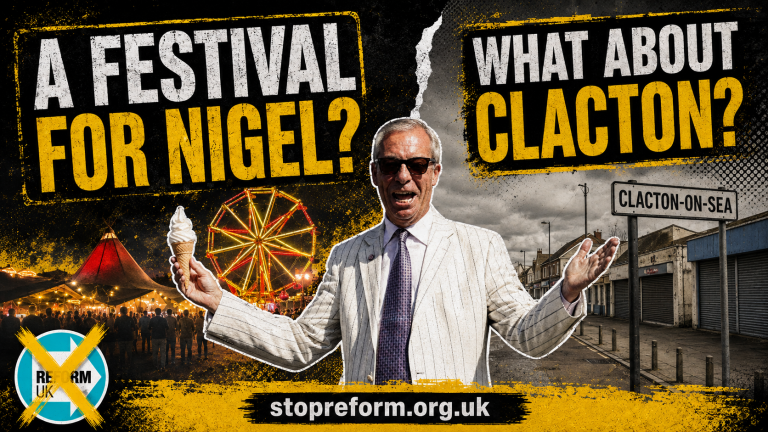
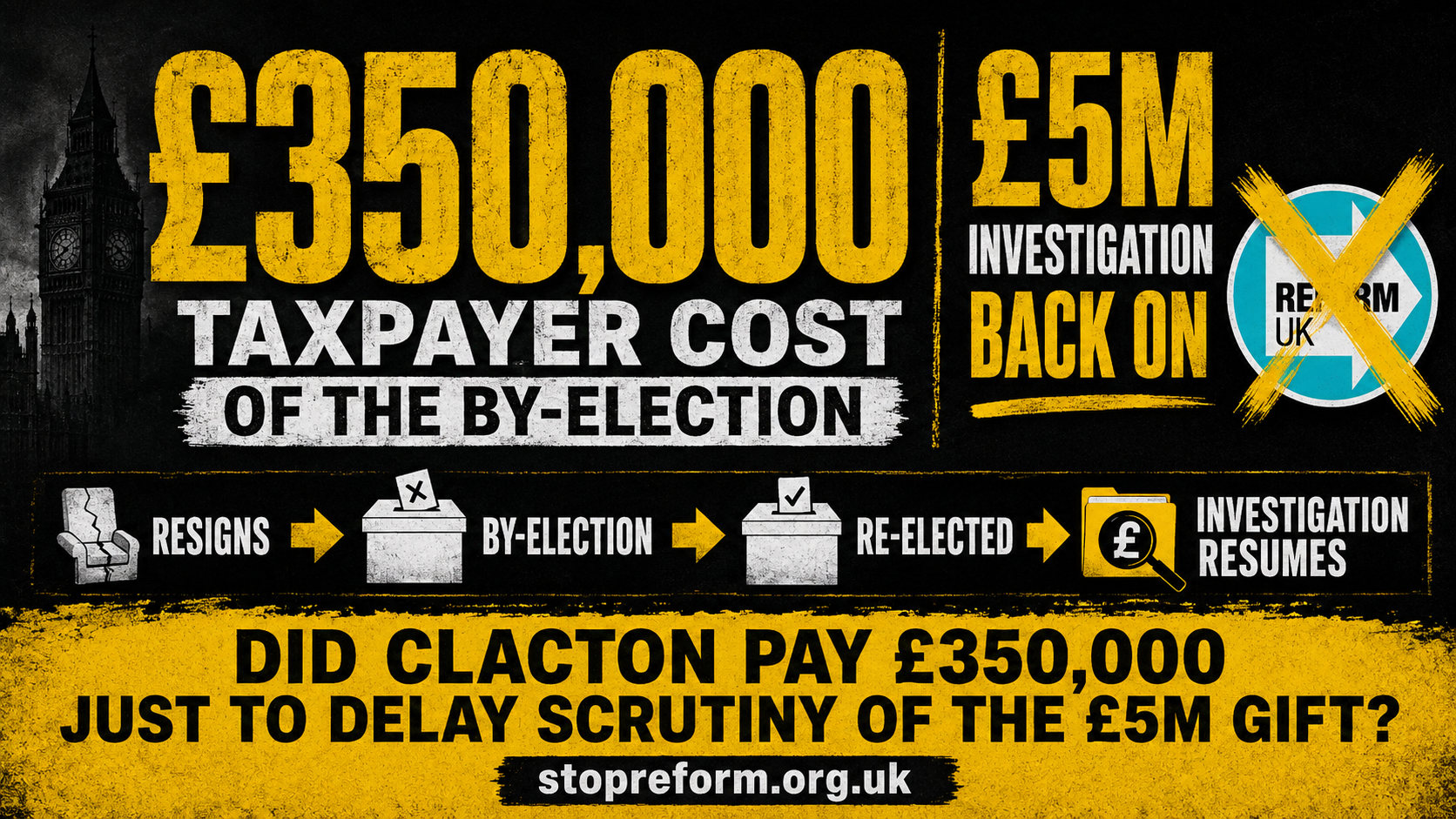
Nigel Farage resigned as Clacton’s MP while Parliament was investigating his financial declarations. His resignation paused the inquiry, forced another election, and left taxpayers facing a bill estimated at up to around £350,000. He then won the same seat back – and the investigation restarted.
Clacton elected Nigel Farage in July 2024. Two years later he voluntarily gave up that seat while the Parliamentary Commissioner for Standards was investigating whether financial support connected to him should have been declared. The resignation did not end the investigation. It paused it.
Why did Clacton have to vote again?
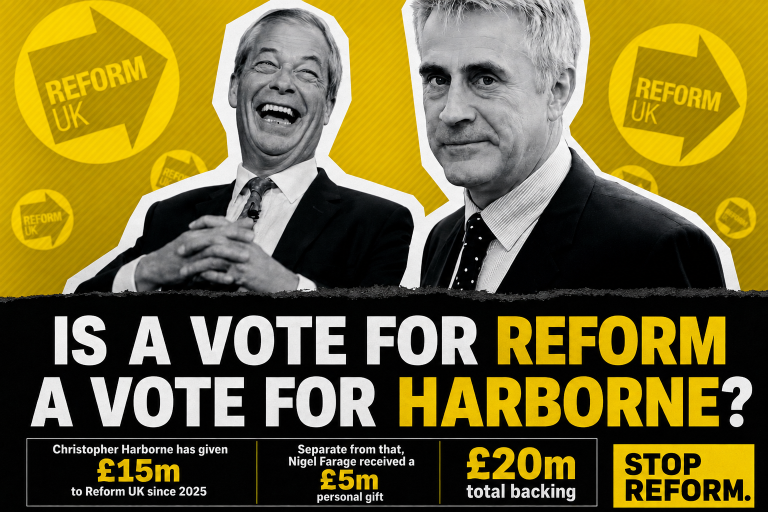
On 13 May 2026 the Parliamentary Commissioner for Standards opened an inquiry into Farage’s financial interests, including the £5 million personal gift from Christopher Harborne. Farage denied wrongdoing and argued that the gift did not have to be declared.
On 7 July he resigned as MP for Clacton and said he would immediately stand again in the resulting by-election. His stated argument was that Clacton voters should decide whether he retained their confidence rather than Westminster.
Up to around £350,000 – paid from public funds
The final settled expenditure for the 2026 Clacton by-election was not yet available when government figures were published. The government said the average cost of a UK parliamentary by-election between 2021 and 2025 was about £343,768, including candidate mailings. The Institute for Government says parliamentary by-elections generally cost between £250,000 and £350,000.
Clacton was unusually complicated. A record 34 candidates stood and the ballot paper was about 90cm long. Reporting during the campaign used estimates at the upper end of the normal by-election range.
Farage made the decision. Other people did the work.
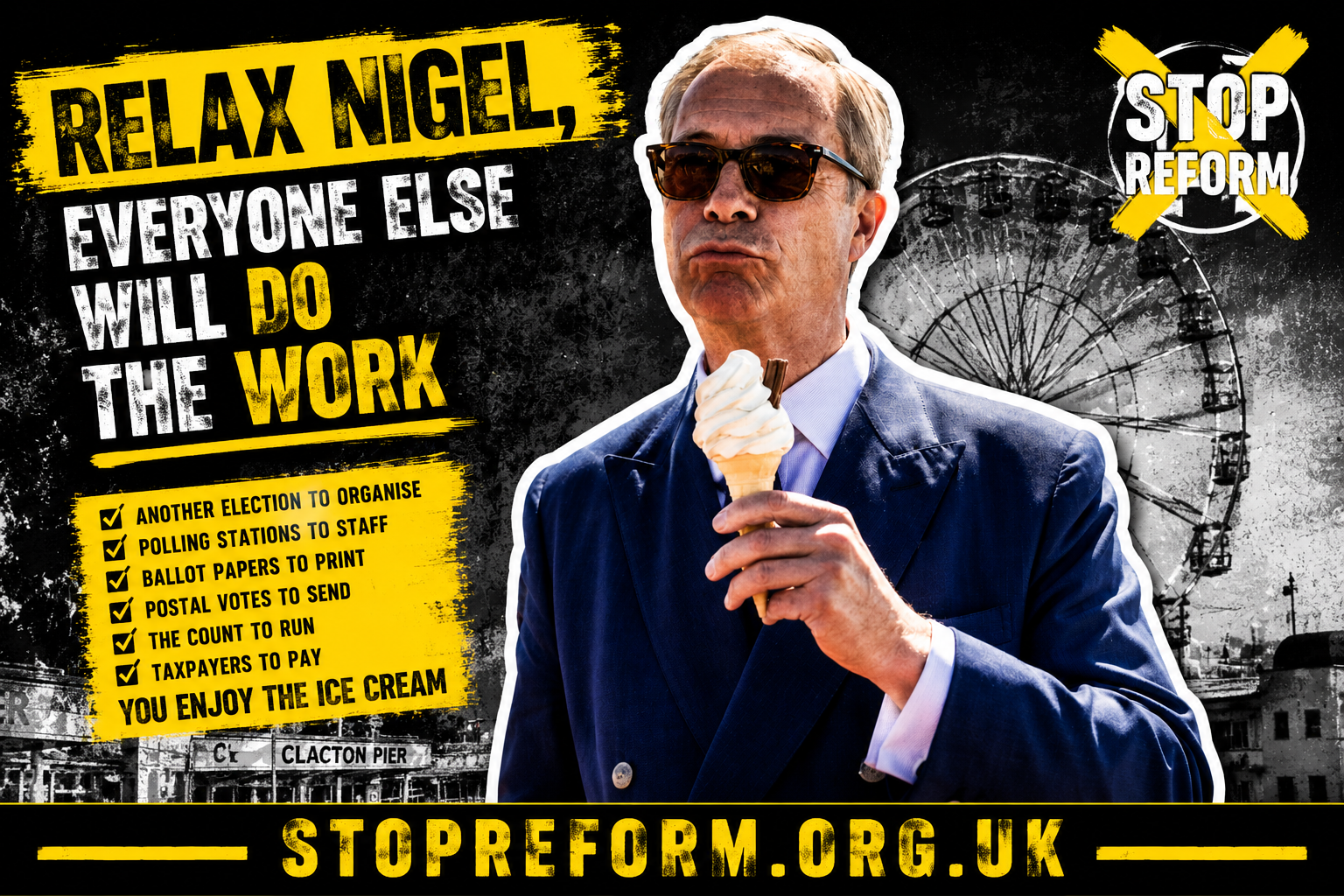
Tendring District Council and election staff had to organise polling stations, issue postal votes, print and distribute ballot papers, recruit and brief staff, arrange the count, manage security and deal with a record 34-candidate field.
The unusually long ballot paper caused logistical problems. Larger counting tables were needed and the count arrangements had to be adapted.
And did the resignation stop the £5m investigation?
Parliament’s standards process paused because Farage was no longer an MP.
When Farage returned to Parliament, the Parliamentary Commissioner for Standards resumed the investigation.
That is the crucial outcome. The by-election returned Farage to the same seat, but it did not remove the underlying standards questions.
The absurd ending
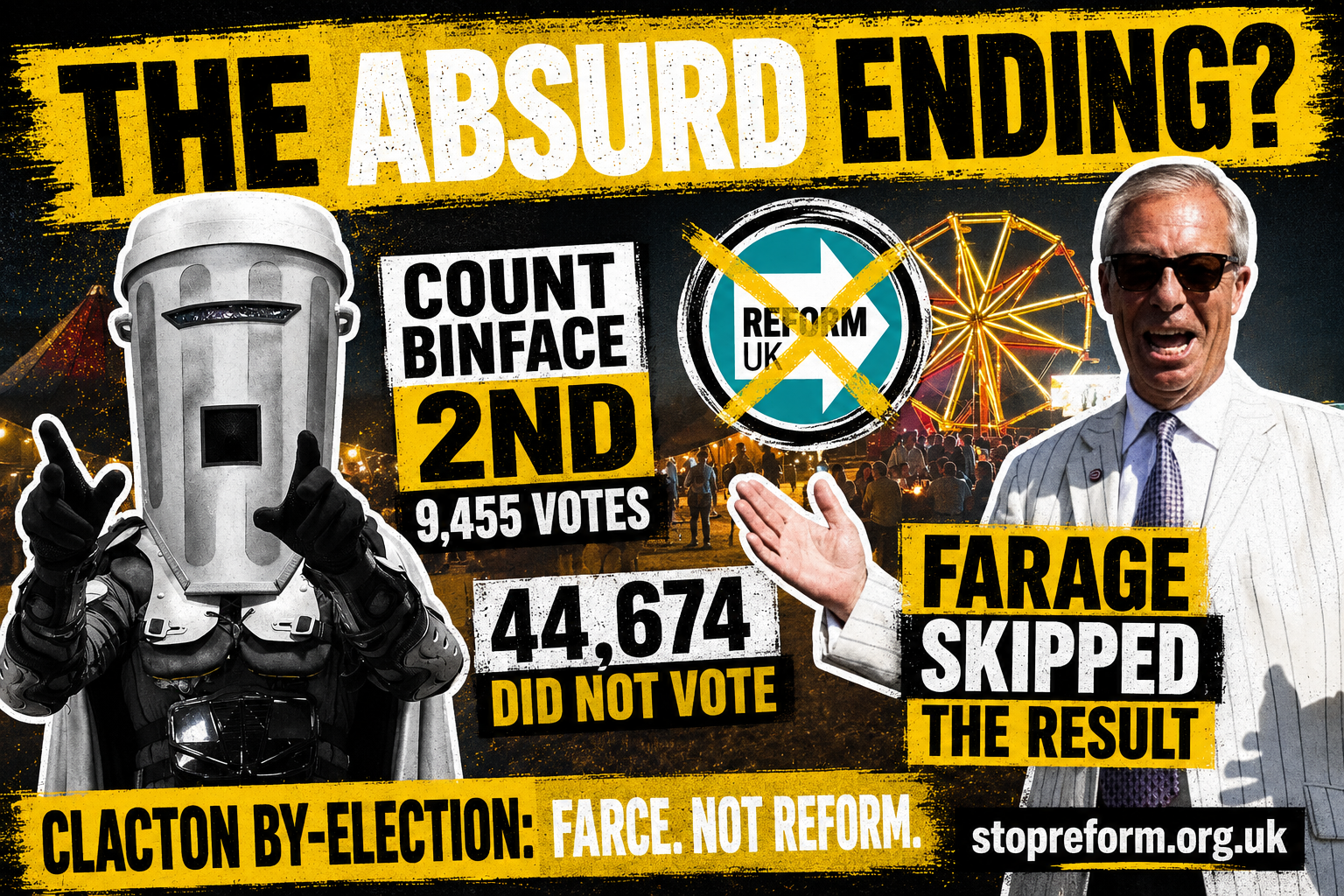
The major established parties chose not to contest the by-election. A record 34 candidates stood. Farage won with 22,239 votes. His nearest challenger was the satirical candidate Count Binface with 9,455 votes.
The electorate was 79,785 and turnout was about 44%. More people therefore stayed home than voted for Farage. The boycott by the major parties also means this was not a normal electoral contest.
Farage did not attend the official count. He told supporters at a separate Reform event that he would not stand on a stage and be, in his words, “demeaned and humiliated” by other candidates. The returning officer said attendance was each candidate’s own decision and that there was no reason the count could not proceed safely.
Questions Nigel Farage should answer
What do you think?
Was this by-election necessary? Tell us what you think about the cost, the investigation and what Clacton got from the exercise.
Sources
- UK Parliament – Clacton by-election result
https://members.parliament.uk/constituency/3989/election/559 - UK Parliament – average by-election cost
https://questions-statements.parliament.uk/written-questions/detail/2026-07-07/16692/ - Institute for Government – by-election costs and Reform offer to pay
https://www.instituteforgovernment.org.uk/explainer/by-elections - ITV – Reform could not directly fund the specific by-election
https://www.itv.com/news/2026-07-08/what-happens-next-in-clacton-by-election-and-will-nigel-farage-be-contested - ITV – Farage wins and standards inquiry resumes
https://www.itv.com/news/anglia/2026-08-14/nigel-farage-wins-clacton-by-election-triggered-by-own-resignation - ITV – Farage absent from the count
https://www.itv.com/news/anglia/2026-08-14/farage-not-attending-by-election-count-due-to-organised-campaign-to-disrupt - The Guardian – resignation and the standards inquiry
https://www.theguardian.com/politics/2026/jul/07/why-farage-quitting-mp-scrutiny-gifts-clacton-reform-uk - The Guardian – inquiry resumed after re-election
https://www.theguardian.com/politics/2026/aug/14/standards-watchdog-investigation-nigel-farage-financial-gifts