BRITISH CITIZEN.
But were you born in Britain?
Reform often describes its housing policy as putting British people first. The published document is more specific: it repeatedly says British-born workers. That distinction catches people who are British citizens, have lived here for decades and may have British parents, but happened to be born somewhere else.
Reform often describes its housing policy as putting British people first. The published document is more specific: it repeatedly says British-born workers. That distinction catches people who are British citizens, have lived here for decades and may have British parents, but happened to be born somewhere else.
The key issue
- Reform targets at least half of social homes in England for British-born workers.
- Its 500,000-home programme is described as housing for British-born workers, particularly under-35s.
- A British citizen can be born abroad.
- The policy therefore creates a birthplace test in addition to nationality and housing need.
What they said
Citizenship is not birthplace
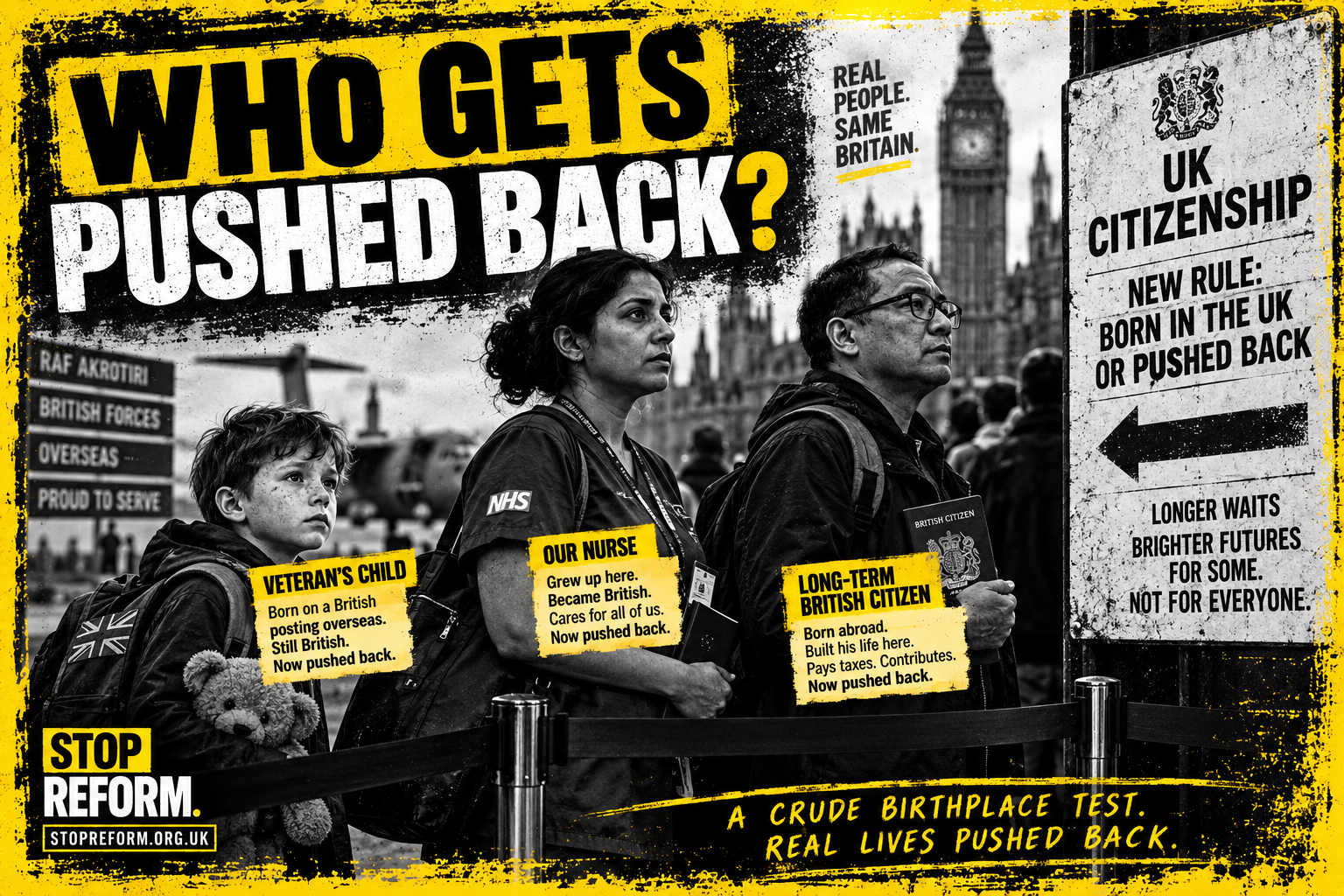
A British citizen may have been born overseas because a parent served in the armed forces, worked abroad, emigrated temporarily, or because the person naturalised after living and working here for years. Reform's wording is not simply "British citizen". It repeatedly uses "British born" as an allocation criterion.

Try the policy on real people
A British child born while their parents were working in Singapore, a nurse who arrived aged two and later became British, or a veteran's child born on an overseas posting may all have a stronger lifelong connection to Britain than somebody recently born here. A birthplace rule treats that fact as relevant to housing priority.
What is already restricted
The current social-housing system does not simply give homes to anybody arriving in Britain. Eligibility already depends on immigration status and statutory rules. Reform goes considerably further by proposing removal of foreign nationals from social housing and a separate British-born worker target.
The unanswered edge cases
Reform should define British-born precisely. Does birth on a British military base overseas count? What about children of diplomats? British citizens born in Crown Dependencies or Overseas Territories? What about adoption? Richard Tice has suggested some overseas-born children of British parents would be treated as British-born, which itself demonstrates that the apparently simple rule needs exceptions.
Our assessment
A government can legitimately give weight to local connection, length of residence, work, service and genuine housing need. Birthplace is a crude proxy for all of those things. If Reform means citizenship plus long-term connection, it should say that. If it really means birthplace, British voters born abroad deserve to know why their place of birth should reduce their housing priority.
Sources
We separate Reform’s own policy and statements from outside reporting and our analysis. Sources checked when this article was prepared.