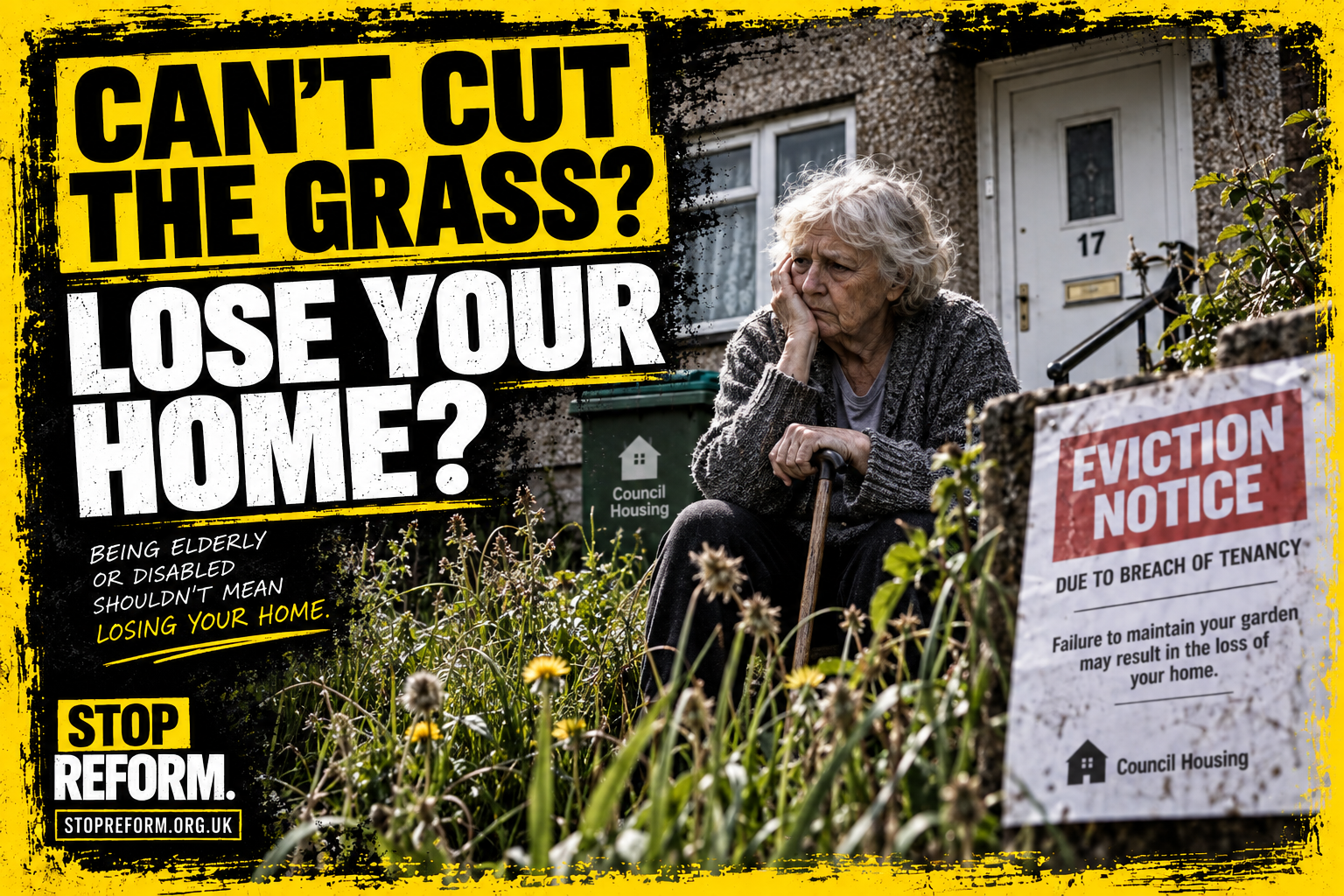
DON’T MAINTAIN THE GARDEN?
Reform want eviction to follow.
This is not just a stray comment from Lee Anderson. Reform's published housing policy says statutory social-housing tenancy standards would be introduced and repeated failures would require eviction. The policy specifically talks about maintenance of property and estates. The question is not whether tenants should look after homes. The question is when poor maintenance should cost someone their home.
This is not just a stray comment from Lee Anderson. Reform's published housing policy says statutory social-housing tenancy standards would be introduced and repeated failures would require eviction. The policy specifically talks about maintenance of property and estates. The question is not whether tenants should look after homes. The question is when poor maintenance should cost someone their home.
The key issue
- Reform says repeated breaches of social-housing maintenance standards should require eviction.
- Lee Anderson said homes should be decorated and gardens looked after.
- The published policy does not set out a detailed disability, illness, bereavement or caring exemption.
- Existing landlords already have powers to deal with serious tenancy breaches. Reform proposes making repeated maintenance failure an eviction requirement.
What they said
The policy is explicit
Reform's Affordable Social Housing for Working Britain paper says strict criteria will return for maintenance of property and estates, with evictions required for repeated breaches. Later, it says statutory tenancy standards would make eviction for repeated failures mandatory rather than discretionary.
The reasonable part
Social housing is valuable public housing. Tenants should not deliberately destroy homes, cause serious nuisance or leave properties in dangerous condition. Taxpayers and neighbours are entitled to expect reasonable care. Existing tenancy agreements already contain obligations and landlords already have routes to act against serious breaches.
Where it becomes difficult
A garden can become unmanageable because someone has cancer, develops a disability, loses mobility, becomes a full-time carer, is admitted to hospital, suffers bereavement or simply cannot afford private help. The policy document does not spell out how those circumstances change a mandatory-eviction rule. A fair system needs support, reasonable adjustments and discretion before homelessness becomes the punishment for an untidy property.
Who decides what presentable means?
The difference between deliberate neglect and a garden that is not neat enough is subjective. If Parliament creates a mandatory ground, the definition matters. How high can grass be? What happens during long hospital stays? Who pays for work a disabled tenant cannot physically do? How many warnings count as repeated? These details are not trivial once the consequence is losing a home.

Our assessment
Reform is right that serious deliberate neglect should have consequences. We disagree that the answer is a blunt mandatory-eviction rule without detailed safeguards. The state should be able to enforce tenancy standards while still recognising disability, age, illness and temporary crisis. A council house is a home, and eviction should remain a proportionate last resort.
Sources
We separate Reform’s own policy and statements from outside reporting and our analysis. Sources checked when this article was prepared.