




How strongly do you want to stop Reform UK and Nigel Farage?

Join the Clacton Recall Team
If you are registered to vote in Clacton, join us now so we can move quickly if a lawful recall petition opens.
Read More
About 10% of eligible registered electors would have to sign the official petition. Using the August 2026 Clacton electorate as an illustration, that is about 8,000 people.
Important: a suspension does not automatically remove an MP. The recall condition must be met through the statutory parliamentary process. A qualifying Commons suspension is normally at least 10 sitting days, or at least 14 calendar days where the period is not expressed in sitting days. If a recall petition opens, it runs for six weeks and must reach 10% of eligible electors.
A recall petition cannot be opened because a campaign wants one, because an investigation exists, or simply because voters dislike an MP. One of the legal recall conditions must first be satisfied.
If the legal condition is met, the Speaker notifies the local Petition Officer and the official six-week process begins. Eligible electors can then sign in person, by post or by proxy.
If at least 10% sign, the seat becomes vacant and a by-election follows. The recalled MP is legally allowed to stand again.
Clacton’s electorate at the 13 August 2026 by-election was 79,785. Ten per cent is about 7,979. The actual legal threshold would be calculated from the eligible signing register if a petition opened.
- A successful recall petition would give Clacton another vote.
- The decision would belong to eligible local electors.
- Building the team now means local voters can move quickly if the legal process opens.
WHAT DO YOU WANT TO KNOW?

What the result actually means
Farage received 22,239 votes from an electorate of 79,785. He won 63.3% of votes cast, but only 27.9% of the whole registered electorate voted for him. The remaining 72.1% either voted for somebody else or did not vote.
Read more
The 72.1% figure uses the whole registered electorate as the denominator. It includes people who voted for somebody else and people who did not vote. It does not mean 72.1% actively voted against Farage.
We agree with the Local People principle that MPs should be genuinely connected to the constituencies they represent, remain locally accessible and treat representing the constituency as their main job rather than a platform for a political career or outside work.
Read the Local People manifesto- Farage won decisively among those who voted.
- But only 27.9% of the registered electorate cast a vote for him, so turnout and participation can materially change the result.
- If a lawful recall petition ever opens, the legal decision would sit with eligible Clacton voters.
Reform says it would take the UK out of the ECHR
The ECHR is not the EU. It is a human-rights treaty under the separate Council of Europe system. It protects rights used by ordinary people in cases involving fair trials, family life, privacy, treatment in custody and failures by public authorities. Reform says the UK should leave it…
Read more
The Convention protects rights including life, freedom from torture, liberty, fair trial, privacy and family life, expression, assembly and protection against discrimination in the enjoyment of Convention rights.
Reform’s case: Reform argues that leaving is necessary to prevent an international court obstructing deportation and border policy and to return final control to Parliament.
Stop Reform’s view: immigration is only one part of the ECHR. We do not think changing border policy justifies removing an external rights safeguard from everybody in the UK.
- People would lose the current final route to the European Court of Human Rights after exhausting UK legal remedies.
- The Convention is used in cases involving fair trials, family life, privacy, freedom of expression, treatment in custody and failures by public authorities, not just asylum.
- British governments would no longer be bound by the Convention system in the same way. What protection replaced it would depend on future UK legislation.

Reform says it would repeal the Human Rights Act
The Human Rights Act lets people enforce many Convention rights in British courts and requires public authorities to act compatibly with those rights. That reaches into care, policing, prisons, hospitals, family life and investigations into serious state failures. Reform says it would repeal the Act…
Read more
Section 6 makes it unlawful for public authorities to act incompatibly with Convention rights, subject to the Act’s rules and exceptions. The Act lets many human-rights claims be dealt with in British courts.
Stop Reform’s view: these are protections ordinary people can use when dealing with the state. We would not remove them without a clear replacement providing equivalent or stronger safeguards.
- Older and disabled people can rely on rights involving dignity, family contact and treatment when dealing with public care and health services.
- Families can challenge serious failures by public authorities, including failures to protect life or properly investigate deaths.
- People dealing with police, prisons, councils, hospitals and other public bodies can enforce Convention rights in UK courts.
- Privacy, family life, liberty, expression and protection from inhuman or degrading treatment apply to everyone, not one political issue.

Stop the boats. Don’t turn people into the enemy.
Stop Reform agrees that dangerous small-boat crossings should be stopped. We also believe people can demand lower immigration, faster removals and tougher borders without turning migrants or minorities into enemies. Britain needs a system that is controlled, quick and credible, without hatred or false narratives…
Read more
People can support lower immigration, tougher borders and faster removals without blaming whole groups of migrants or minorities. People smugglers exploit people who are trying to improve or protect their lives, and the crossings themselves are dangerous.
The UK needs an asylum and immigration system that is faster, controlled and credible: better legal decision-making, quicker decisions and appeals, enforcement against people-smuggling gangs, removal where there is no right to remain, and workable lawful routes where Parliament decides they are needed.
Reform’s current policy goes much further than “stop the boats”: it proposes leaving the ECHR, repealing the Human Rights Act, abolishing existing Indefinite Leave to Remain arrangements and restricting most welfare to British citizens.
- A dysfunctional asylum system costs taxpayers, leaves genuine claims unresolved and weakens confidence in border control.
- Hostile rhetoric can spill over onto British citizens and lawful residents who are treated as outsiders because of their background.
- Good policy should reduce dangerous crossings and illegal working without creating hatred between neighbours.

Reform says it would abolish ILR and rescind existing awards
This is not just a small-boats policy. Reform’s current plan would abolish Indefinite Leave to Remain for many lawful residents and replace it with renewable visas, higher salary thresholds and tighter welfare rules. That could affect established families, employers, NHS staff and people who have lived legally in Britain for years…
Read more
Reform’s current policy says it would abolish Indefinite Leave to Remain and rescind existing awards, replacing them with five-year renewable visas with higher salary thresholds, English-language and character requirements.
Reform’s own FAQ says EU citizens protected by the Withdrawal Agreement would keep settled status, although welfare entitlement would change. EU nationals arriving after 1 January 2021 would be subject to the new system.
For foreign spouses of British citizens, Reform says a spouse/partner visa would remain available and citizenship application fees would be reduced for those eligible. Foreign healthcare workers would also be subject to the new rules, with a proposed Acute Skills Shortage Visa for specified critical shortages.
- British citizens with foreign spouses or partners could face a different long-term visa route even where the family is already settled here.
- Employers, hospitals and care services employing long-term foreign-national staff could face repeated visa and salary-threshold requirements.
- Children of people on the new renewable visas would face different citizenship rules from children whose parents currently hold ILR.
- EU citizens with Withdrawal Agreement settled status are specifically excluded from losing that status under Reform’s FAQ, but Reform says their welfare entitlement would change.

Reform’s 2026 welfare plan would change cash disability support for some claimants
Reform says severe and enduring cases would keep cash support, while some people assessed as having milder needs would move towards support for verified disability costs. For disabled people and carers, the detail matters because real costs are often irregular, personal and difficult to fit into a restricted list…
Read more
Reform proposes a new Disability Needs Assessment, changes to PIP and Universal Credit health support, and reassessment of some existing claims over three years. Its document says the overall welfare package would save £50bn a year by 2030. That is Reform’s estimate.
Stop Reform’s concern: disability costs are not always predictable or easy to fit into an approved list. Reassessment can also hit people with serious fluctuating or less visible conditions.
- Some people could lose flexible cash support if they do not meet the new severity gateway.
- Restricted support for approved costs may not cover every real-world expense associated with disability.
- Carers and household budgets can be affected when a disabled person’s income changes.

Why was Nigel Farage given £5 million?
Christopher Harborne gave Nigel Farage a £5 million personal gift. That money is separate from Harborne’s multimillion-pound donations to Reform UK and is not included in the party-donation percentages shown elsewhere on this page. Farage has described the gift as money for security, a reward for Brexit campaigning and an unconditional personal gift. The parliamentary standards investigation is active…
Read more
- Security: Farage has said the money was intended to fund his personal security.
- Brexit reward: he later described it as a reward for his years campaigning for Brexit.
- Unconditional personal gift: he has argued that it was private and unconditional.
- Financial sacrifice: he has also discussed the financial cost that political campaigning imposed on him.
Those descriptions may overlap, but they are not identical. The fair question is: why have the explanations varied, and what was the gift actually intended to recognise or fund?
The Parliamentary Commissioner for Standards investigation is active. An investigation is not a finding that Farage broke the rules.
Harborne has given millions to Reform and £5 million personally to its leader. There is no established evidence of a quid pro quo. But it is still reasonable to ask: why give sums on this scale, what access follows, and should any political leader or party be this financially dependent on one benefactor?
- A £5m personal gift to a political leader is unusually large and raises obvious questions about transparency.
- Voters deserve to understand the relationship between major political donors, party leaders and declared interests.
- The standards process should establish facts without assuming guilt in advance.

Who pays Nigel Farage, and how much?
Register-based tracking covering July 2024 to 7 July 2026 identifies 16 outside income sources worth £2,064,562, on top of Farage’s parliamentary salary. GB News, Direct Bullion and Cameo account for most of it. Some entries are ongoing work and some are one-off speaking or media payments…
Read More
| Payer / work | Tracked income |
|---|---|
| Direct Bullion Brand ambassador / gold promotion | £776,700 |
| GB News Presenter / media work | £723,128 |
| Cameo Personalised video messages | £222,886 |
| News Corp Media / commentary | £70,567 |
| The Telegraph Articles / column | £48,000 |
| Nomad Capitalist Speaking / media | £40,075 |
| Blockworks Speaking engagement | £30,000 |
| Club for Growth Speaking engagement | £27,857 |
| Imperial Independent Media Speaking engagement | £25,972 |
| X Corp Social-media income | £22,713 |
| Google Social-media income | £21,590 |
| Zebu Live Speaking engagement | £20,000 |
| AZ Liberty Network Speaking engagement | £13,520 |
| Hillsdale College Speaking engagement | £11,349 |
| BTC Inc. Speaking engagement | £7,410 |
| Meta Social-media income | £2,795 |
| Total outside income | £2,064,562 |
Source: DeSmog’s 7 July 2026 tracker, which says its figures are based on Farage’s official parliamentary register. The 16 entries are income sources, not necessarily 16 permanent jobs. Separate gifts and benefits take the broader tracked value above £2.3m.
We think being an MP should be the member’s main job. Outside work should be limited so constituency and parliamentary duties come first. Where extra income arises mainly because someone holds elected office, we also support a rule requiring a meaningful portion to be returned to or invested transparently in the constituency they represent.
Local People: constituency before a second job- Outside work is permitted, but voters can ask whether the scale of paid work leaves enough time and attention for parliamentary and constituency duties.
- GB News and Direct Bullion are not incidental amounts. Together, register-based totals are about £1.5m.
- Knowing exactly who pays an MP helps voters judge possible conflicts, commercial relationships and competing demands on their representative’s time.
- Registered outside earnings are not automatically wrongdoing. Transparency is what allows voters to make the judgement.
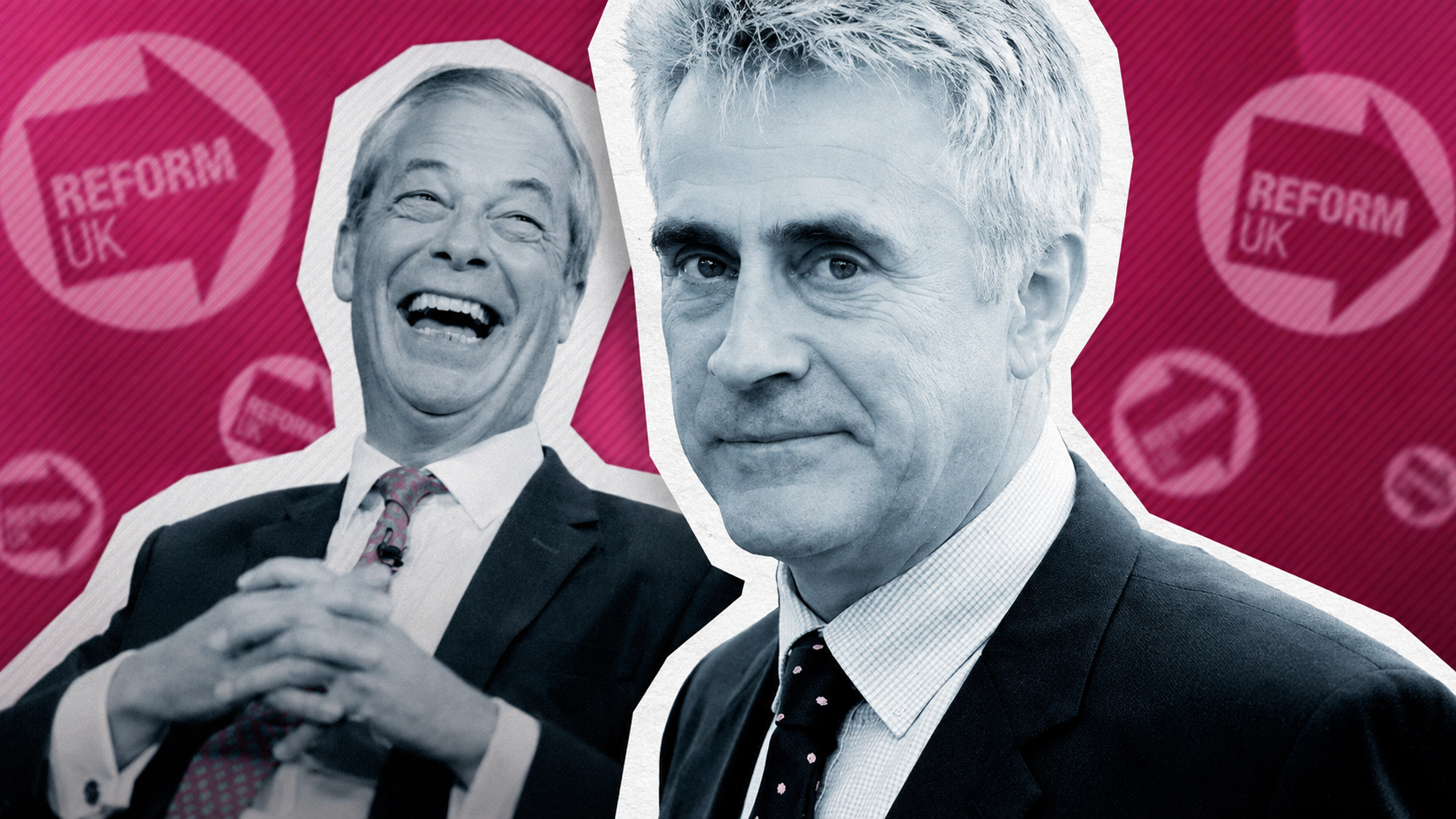
Harborne’s registered donations to Reform and the Brexit Party
Channel 4 reports that Christopher Harborne has given £15 million to Reform UK since 2025 and previously gave £10.2 million to the Brexit Party, which later became Reform. Separately, he gave Nigel Farage a £5 million personal gift…
Read more
Harborne also gave Farage £5 million personally before Farage entered Parliament. That gift is not counted in the party percentages above. Parliament’s standards watchdog is investigating whether it should have been declared. An investigation is not a finding of wrongdoing.
Harborne is a British-Thai businessman and technology investor who has lived in Thailand for more than two decades. His interests include aviation and digital assets. Reporting and legal filings have linked a substantial part of his wealth to Bitfinex and Tether.
Farage says Harborne wants nothing in return. There is no established evidence of a secret quid pro quo.
Donations are a normal and necessary part of democratic politics. The issue here is concentration. Would most people give a political movement millions of pounds, then give its leader another £5 million personally, with absolutely no expectation of access, influence or consideration now or later? That is a question, not an allegation, and voters are entitled to ask it.
Christopher Harborne: quick FAQs
Who is Christopher Harborne?
Christopher Harborne is a British-Thai billionaire businessman and technology investor. He was born in Britain, also holds Thai citizenship, and has become the largest financial backer of Reform UK and its predecessor, the Brexit Party. He previously donated smaller sums to the Conservative Party.
How did Christopher Harborne make his money?
His wealth comes from aviation businesses, technology investments and cryptocurrency. Court filings and financial reporting have described him as holding a significant stake in Bitfinex, which is closely linked to Tether.
Where does Christopher Harborne live?
He is based in Thailand and has lived and worked there for more than 20 years. He is a British and Thai citizen.
Does Christopher Harborne have a criminal record?
We have found no reliable evidence that Christopher Harborne has a criminal conviction. The Reform crypto donor with a reported US conviction is Ben Delo. Reuters reported that Delo pleaded guilty in 2022 to failing to implement adequate anti-money-laundering controls at BitMEX and was pardoned in 2025.
Stop Reform supports political donations, but not financial dependence on one person. We want stronger UK-connection rules for political funding, a legal ceiling on how much of a party’s annual funding can come from one donor or connected group, and a system that encourages parties to be funded primarily by the electorate they seek to represent.
- Harborne accounts for about 56% of the party’s all-time registered donations in the Reform UK / Brexit Party record.
- The £5m personal gift to Farage is separate from those party donations.
- There is no established evidence that Harborne bought a policy. Concentration, access and influence are still legitimate democratic questions.
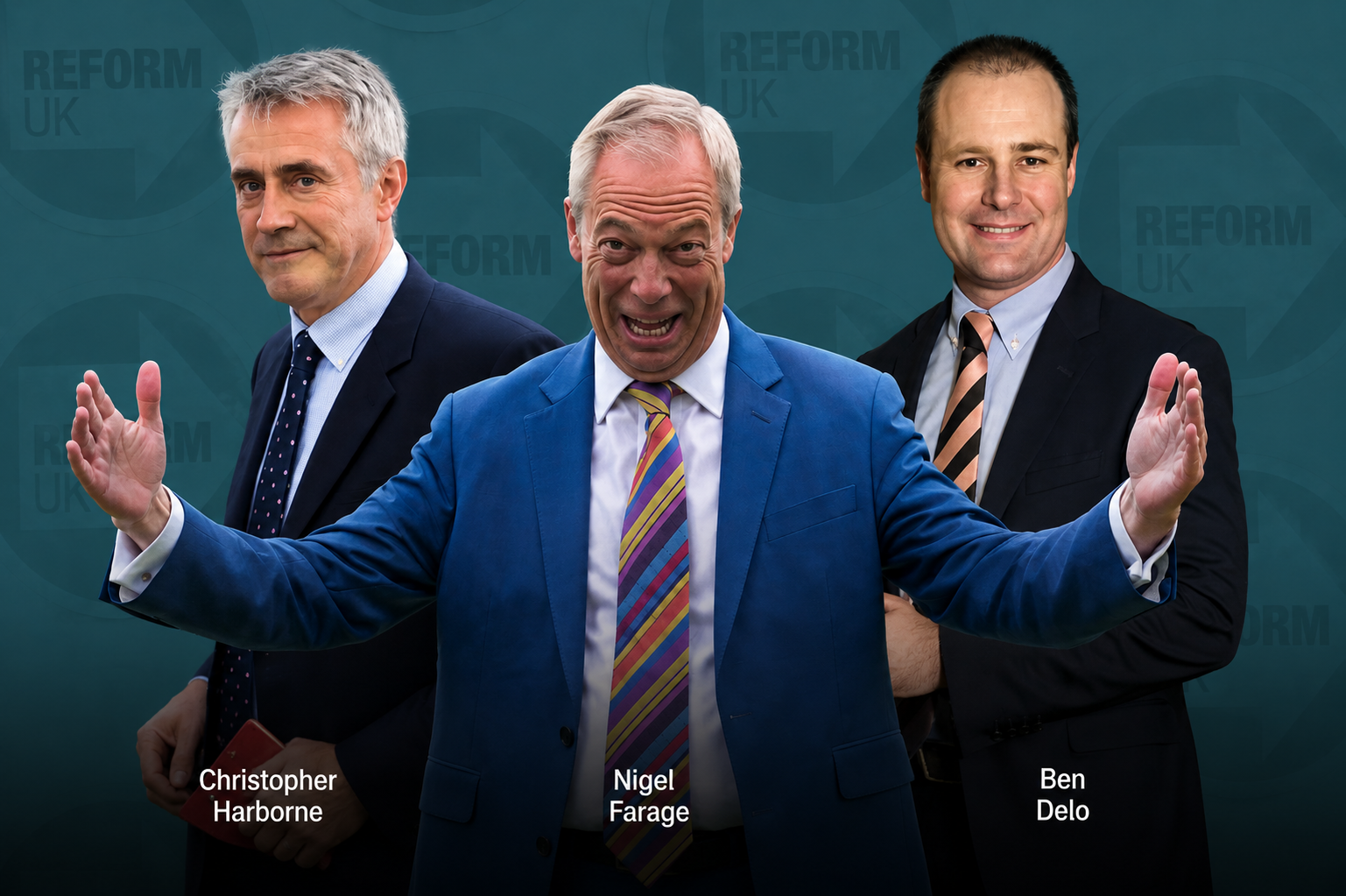
of Reform’s all-time registered donations came from just Harborne and Delo
The Reform UK / Brexit Party donation database totals about £45.17 million. Christopher Harborne accounts for about £25.19 million and Ben Delo £4 million. Together, just two donors account for roughly £29.19 million…
Read more
Q1 2026 was unusually concentrated, but this is not just a three-month story. Across the party’s registered donation history, Harborne and Delo alone account for almost two thirds of the money recorded in the database.
Ben Delo
Delo co-founded the cryptocurrency exchange BitMEX. He gave Reform £4 million in Q1 2026. Reuters reported that he had been living in Hong Kong and said he was relocating to Britain. In 2022 he pleaded guilty in the United States to failing to implement adequate anti-money-laundering controls at BitMEX. He was pardoned in 2025.
David John Grainger
Grainger is a biotechnology entrepreneur and venture capitalist. Electoral Commission records show £1.1 million of donations to Reform during Q1 2026, following further donations in late 2025.
George Cottrell and donations made by his mother
There is a separate live issue involving George Cottrell, a long-standing Farage associate who served prison time in the United States after a wire-fraud conviction. Reuters reported in July 2026 that British police were investigating £500,000 of donations to Reform made by Cottrell’s mother, Fiona Cottrell, over possible breaches of political-donation law. No arrests had been made and the investigation does not establish that the donations were unlawful.
Later reporting said George Cottrell transferred more than $2 million to his mother before she made substantial political donations. That raises questions about the original source of the money, but it should be described as a matter under scrutiny, not as proof that he secretly funded Reform through her.
Major donations are legal when they comply with the rules. The democratic question is whether a national party should be able to depend so heavily on a very small number of wealthy individuals, and whether voters can clearly see the original source of political money.
- Harborne alone accounts for more than half of the registered donations in the Reform UK / Brexit Party record.
- Harborne and Delo together account for almost two thirds.
- This is a concentration issue, not an argument that political donations themselves are wrong.

What the numbers show
Donations are normal and all major parties need money to contest elections. The difference is concentration: Reform’s funding is much more dependent on a small number of very large donors than the other major parties in the comparison.
Read more
Over that 12-month period, the same analysis says Reform received £20.4 million from donors who each contributed at least £1 million. The equivalent figures were £3.1 million for the Conservatives and £2.6 million for Labour.
Restore Britain is not included in this 12-month comparison. The Electoral Commission registered Restore Britain as a political party on 20 March 2026, so it does not have a comparable April 2025 to March 2026 party-donation history.
Donations are part of democracy. Dependence is the problem. We want stronger rules requiring a genuine UK connection for political funding, limits preventing one person, company or connected group from becoming the dominant source of a party’s annual money, and incentives that make parties answer financially to ordinary electors rather than a handful of very large backers.
- Labour, Conservatives and Liberal Democrats all receive large donations too.
- On this comparable dataset, Reform is substantially more dependent on donations above £100,000 and on a tiny number of multimillion-pound donors.
- That does not prove donors control policy. It does show that “they’re all the same” is not an accurate description of the funding concentration.

The current headline says “free at the point of use”. Look at the direction too.
Reform’s current headline says the NHS would remain free at the point of use. But its wider record includes tax relief for private healthcare and insurance, private-treatment vouchers and repeated arguments from Farage for a larger private or insurance role. The question is not the slogan, but the direction of travel…
Read more
Current 2026 policy: Reform says the NHS would remain free at the point of use and funded through general taxation.
Reform’s 2024 contract: it proposed 20% tax relief on private healthcare and private health insurance, and private-treatment vouchers when NHS waits exceeded stated targets.
Farage’s longer record: he has repeatedly suggested that the way healthcare is funded should be re-examined and has previously spoken positively about insurance-based models. Those older comments are not the same as Reform’s current published policy.
Stop Reform’s concern: the combination points towards a larger private/insurance role even while the NHS headline remains “free at the point of use”. We think voters should know both parts of the story.
- Tax relief for private insurance would use public tax policy to encourage people who can afford private cover to buy it.
- More NHS-funded use of private providers can increase capacity, but it can also deepen a two-tier system if access depends increasingly on private provision.
- Changes to funding incentives can affect where clinicians work, how public money is spent and whether better-off patients can bypass queues more easily.
Frequently asked questions
Short answers to some of the things people most often misunderstand about Reform’s policies, recall and its funding.
Is the ECHR part of the European Union?
No. The ECHR belongs to the Council of Europe system, which is separate from the EU. Brexit did not take the UK out of the ECHR.
What is the difference between the ECHR and the Human Rights Act?
The ECHR is an international treaty. The Human Rights Act brings most Convention rights into UK law and allows many claims to be dealt with in British courts.
Would leaving the ECHR automatically stop small boats?
No single legal change physically stops Channel crossings. Reform says leaving is necessary for its detention and deportation programme, but border control also depends on operational capacity, enforcement, other law and agreements with other countries.
Is wanting lower immigration racist?
No. People can support lower immigration or tougher borders for many non-racist reasons. Stop Reform’s objection is to policies or rhetoric that turn a legitimate debate into hostility towards groups of people.
Would Reform’s ILR policy only affect people who arrived illegally?
No. Reform’s published ILR policy is aimed at lawful long-term migration as well. Its own FAQ discusses foreign spouses of British citizens, post-2021 EU nationals, children and foreign healthcare workers. EU citizens protected by the Withdrawal Agreement would keep settled status, although Reform says welfare entitlement would change.
Does Stop Reform want the small boats to continue?
No. We want dangerous Channel crossings stopped. We also want an asylum and immigration system that is controlled, quicker and enforceable without blaming every migrant for the failures of governments and criminal smugglers.
Can Nigel Farage be recalled just because he is being investigated?
No. An investigation by itself does not open a recall petition. One of the statutory recall conditions must be met through the relevant legal or parliamentary process.
If a recall petition succeeds, is Farage banned from standing again?
No. A successful petition makes the seat vacant and triggers a by-election, but the recalled MP can stand again.
Did 72.1% of Clacton voters vote against Farage in 2026?
No. 72.1% of the registered electorate did not cast a vote for him. That includes non-voters. Farage won 63.3% of votes actually cast.
“They all get donations.” Is Reform really different?
All major parties receive donations, and donations themselves are not the problem. The difference is concentration. In Q1 2026, Harborne and Ben Delo supplied 75.6% of Reform’s reported private donations. Across April 2025 to March 2026, analysis of Electoral Commission data found the same two donors accounted for 71% of Reform’s registered donation income.
Who is Ben Delo?
Ben Delo is a British cryptocurrency billionaire and co-founder of BitMEX. He gave Reform £4 million in Q1 2026. Reuters reported that he pleaded guilty in the United States in 2022 to failing to implement adequate anti-money-laundering controls at BitMEX and was pardoned in 2025. He said in 2026 that he was relocating to Britain from Hong Kong.
Is Christopher Harborne a foreign donor?
Calling him simply “foreign” is misleading. Harborne is British-Thai and based in Thailand. The stronger question is why one individual’s funding is so large relative to Reform’s overall funding.
Has anyone proved Harborne received a secret payback?
No. There is no established evidence of a secret quid pro quo. Farage says Harborne wants nothing in return. Voters can still scrutinise access, policy alignment and the concentration of political funding.
Does Christopher Harborne have a criminal record?
We have found no reliable evidence that the Reform donor Christopher Harborne has a criminal conviction. The Reform crypto donor with a reported US conviction is Ben Delo, not Harborne. Reuters reported that Delo pleaded guilty in 2022 to failing to implement adequate anti-money-laundering controls at BitMEX and was later pardoned.
Does Reform currently say it will privatise the NHS?
No. Its current 2026 policy says the NHS remains free at the point of use. But Reform’s 2024 contract promoted 20% tax relief for private healthcare and insurance and private-treatment vouchers, while Farage has previously discussed alternative funding models. That wider record is why the question about direction matters.
Does Nigel Farage really have 16 jobs?
“16 jobs” was the description used in a July 2026 Commons debate. The official parliamentary register records employment, earnings, gifts and other interests rather than maintaining a single official job count. The register is the best place to see who pays him and for what.
Has Farage earned £2m outside Parliament?
A July 2026 Commons debate said he had taken about £2m on top of his parliamentary salary. Analyses of his register have also put registered earnings and gifts above £2m since 2024. Not all registered value is the same thing as salary, so we show the official register alongside the claim.
What would Reform’s disability benefit plan change?
The August 2026 plan proposes a new assessment system, protection for severe cases and moving some people with “milder” assessed needs away from unrestricted cash support towards support for verified disability-related costs.
How you can help
Choose as much or as little as suits you.
Sources and evidence
Policy claims are linked to Reform’s own documents where possible. Election and recall figures use official sources. Funding, gifts and outside-work claims are linked to registers, Hansard or reputable reporting.
- House of Commons Library: Recall elections
- UK Parliament: Clacton by-election, 13 August 2026
- Reform UK: current policies
- Reform UK: Making Welfare Work, August 2026
- Reform UK: Policy FAQs, including ILR and settled-status questions
- EHRC: European Convention on Human Rights
- Human Rights Act 1998, section 6
- UK Parliament: Nigel Farage register of interests
- Hansard: MPs’ second jobs debate, 1 July 2026
- Reuters: Farage £5m gift investigation
- Reuters: Harborne and Reform funding
- Channel 4 News: Harborne’s £15m Reform and £10.2m Brexit Party donation history
- DonationWatch: all-time Reform UK / Brexit Party registered donation totals
- Reuters: police investigation into Cottrell-linked donations
- Guardian: Cottrell transfer reporting
- Electoral Commission donations database
- Reform UK 2024 contract: private healthcare proposals
- Full Fact: Reform, Farage and NHS funding claims
- Sky News: Christopher Harborne profile and business background
- Reuters: Reform crypto donors, including Ben Delo conviction background
- Clacton.org: August 2026 election results
- Clacton.org: Stop Reform. Stop Hate. Stop Division.
- Electoral Commission: Q1 2026 party donation totals
- Reuters: Harborne, Delo and Reform Q1 2026 funding
- Metro: Reform receives £7m from Harborne and Delo in Q1 2026
- Guardian: like-for-like large-donation concentration analysis
- Electoral Commission: Restore Britain registration
- Local People manifesto: local connection and full-time representation
A few details so we can continue
We only ask once. Your details will carry through the rest of the questionnaire.
You can help us stop Reform.
Are you registered to vote in the Clacton constituency?
If yes, you are exactly the kind of person we need in the Recall Team if a lawful petition ever opens.
Will you join the Recall Team?
Joining means we record your interest and can keep you informed if a lawful recall process ever opens.
We only ask once. If we already have your details, this section will not appear.
You can change either answer below. We will record the updated choice.
A recall petition could give Clacton another vote.
If a sitting Clacton MP becomes subject to the legal recall process and enough eligible local voters sign the official petition, the seat becomes vacant and a by-election follows.
That means Clacton gets another opportunity to choose who represents the constituency.
Our target: 11,737 Recall Team members
That is approximately 15% of the 2024 Clacton electorate of 78,245. The official electorate would be recalculated if a real petition opened.
What has to happen before a recall?
Nobody can simply launch a recall petition. There is a legal process first.
What could you help with?
Select as many as apply. You are not committing to all of them. This simply helps us understand where you might be useful.
Where could you help?
Become a member of Stop Reform
Membership supports this campaign. It does not tell you which political party or candidate to vote for.
Keep me informed
Choose the updates you want. You can unsubscribe later.
How could you help?
We know we have not thought of everything. If you have an idea, a skill, a contact, an opportunity or simply a better way of doing something, tell us.
Thank you. That’s been recorded.
What you’ve completed so far
Can you help with any of these too?
One last thing, if you have two minutes
These questions are optional, but they will help us understand the people supporting Stop Reform and what matters to them.
Help us understand what matters to you
You can leave any individual answer blank.
What are the main reasons you want to stop Reform?
Select as many as apply.
This is a genuine question. There’s a good chance you’ve thought of something we haven’t.
It looks like we may already have your details.
We do not want to create duplicate supporter records. Secure verification for updating an existing record is the next part we will add.
You’re part of this now.
Thank you for taking the time to tell us how you want to help.
What you completed today
Use the Share Stop Reform button below and send them the questionnaire directly so they can choose for themselves whether to register.